
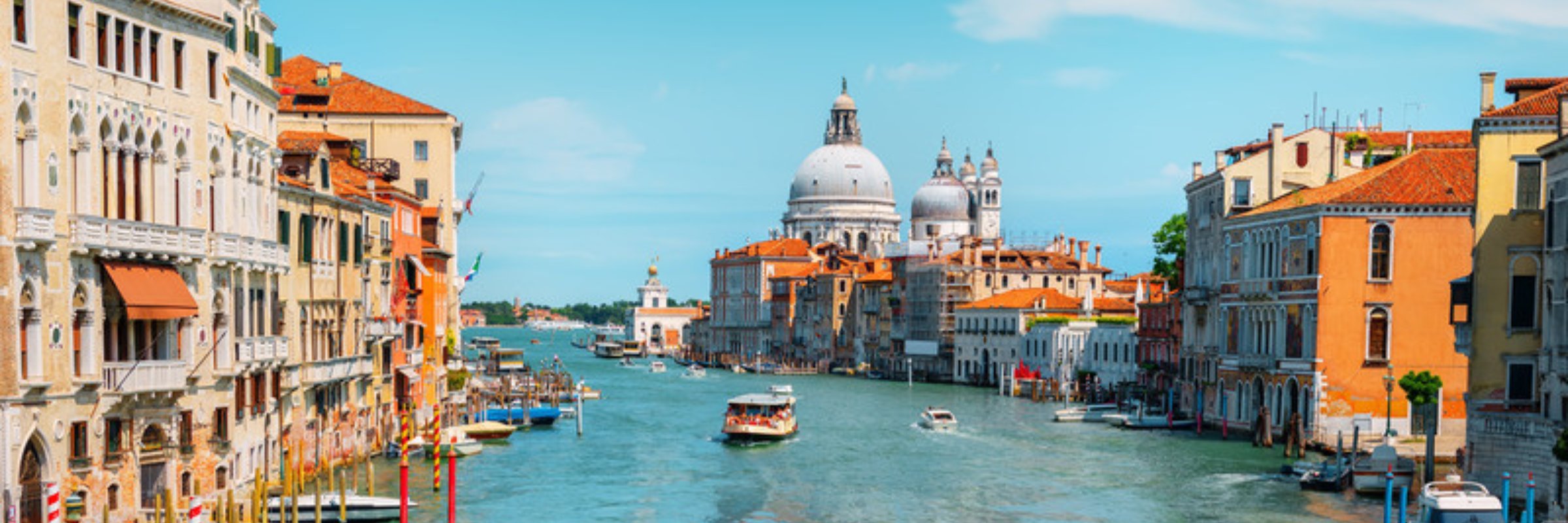
Venice — discover the lagoon city
Sights, museums, getting there, the 2026 access fee and insider tips away from the tourist trails — curated by Venice experts since 2007.
Venice 2026 at a glance
What to know before you travel
| Ideal length of stay | 3 nights for first-time visitors, 5–7 nights to go deeper |
|---|---|
| Best time to visit | April, May, September, October — mild, fewer tourists, lower prices |
| Access fee 2026 | 60 non-consecutive days from 3 April to 26 July 2026 (8:30–16:00) |
| Day-visitor rate | €5 when booked in advance, €10 at short notice |
| Overnight guests | Exempt from the fee — registration or proof of accommodation via the official portal |
| Getting there | ÖBB Nightjet, flight to Marco Polo, car via the A4/Brenner, Flixbus |
| Vaporetto day pass | €25 / 24 hours — single ride €9.50 |
| Key planning topics | Accommodation (sestiere), vaporetto, tickets (skip-the-line), acqua alta |
Venice and its lagoon are a UNESCO World Heritage Site and one of the most extraordinary destinations in north-eastern Italy. The historic city spreads across more than a hundred islands, is connected by hundreds of bridges, is divided into six traditional districts — the sestieri — and remains largely car-free at its centre. If you are coming in 2026, ideally plan at least 3 nights in accommodation on the main island and combine the classics around St Mark’s Square at a relaxed pace with an island day (Murano, Burano, Torcello). Day visitors should check the access fee calendar in advance: on 60 non-consecutive days between 3 April and 26 July 2026 the fee is €5 (booked in good time) or €10 (at short notice). Overnight guests do not pay the fee but must prove their exemption via the official portal.
The most important sights
Venice’s great classics — with brief context instead of mere marketing language.
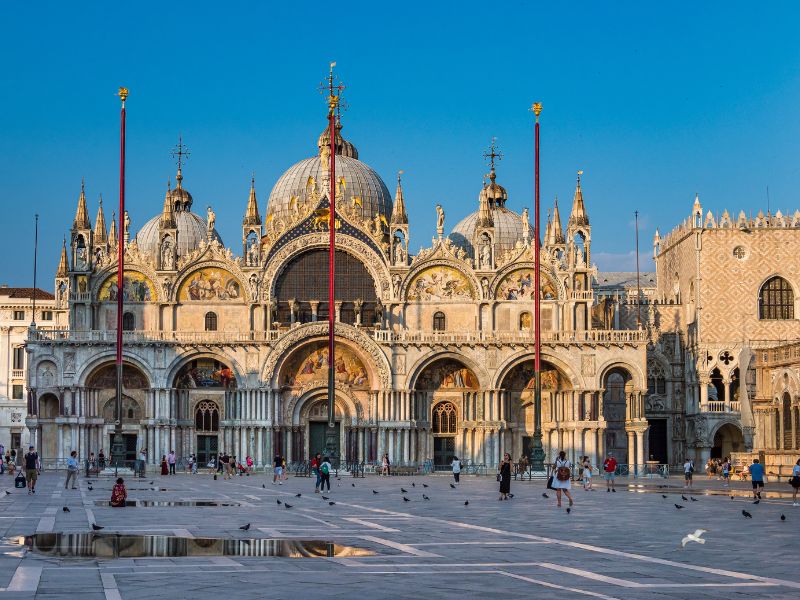
St Mark’s Basilica
Byzantine-influenced cathedral on St Mark’s Square, famous for its gold mosaics and precious furnishings. For 2026, check time slots and ticket options on the official site in advance; the Pala d’Oro, museum/loggia, treasury and campanile are charged separately or as a combined ticket.
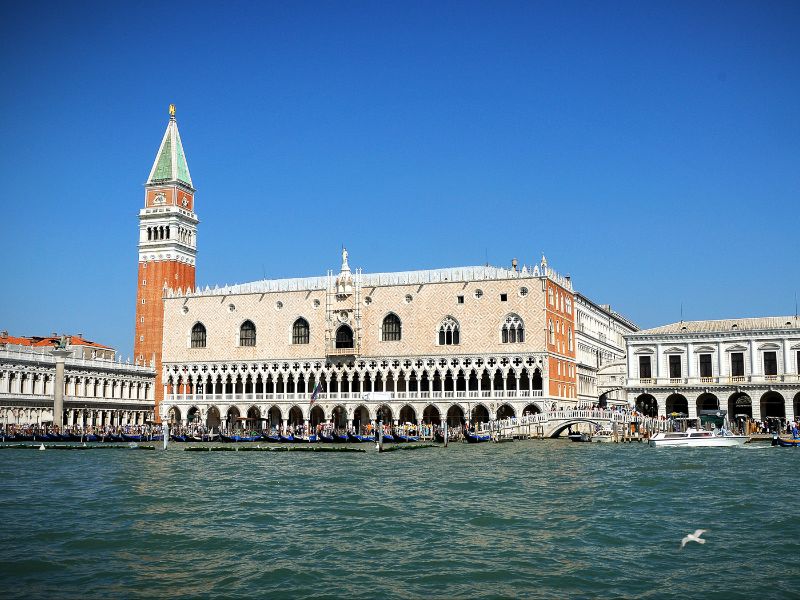
Doge’s Palace
The political power centre of the Venetian Republic for centuries. Highlights: Tintoretto’s “Paradiso”, the Bridge of Sighs and the historic prison areas. Museum ticket currently from about €35 (cheaper online in advance), special routes €40.
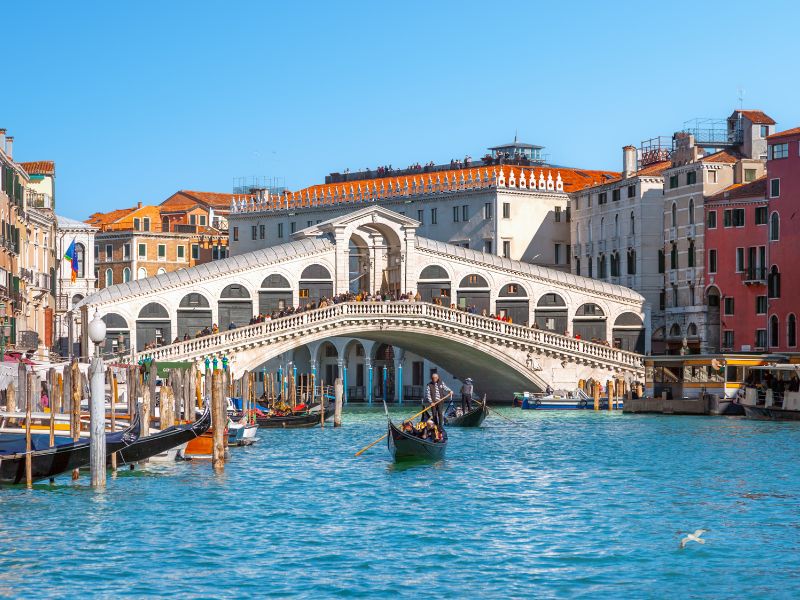
Rialto Bridge
The oldest of the four bridges across the Grand Canal (late 16th century), lined with shops and one of the city’s best-known landmarks. Free to access — far more pleasant early in the morning or late in the evening than at midday.
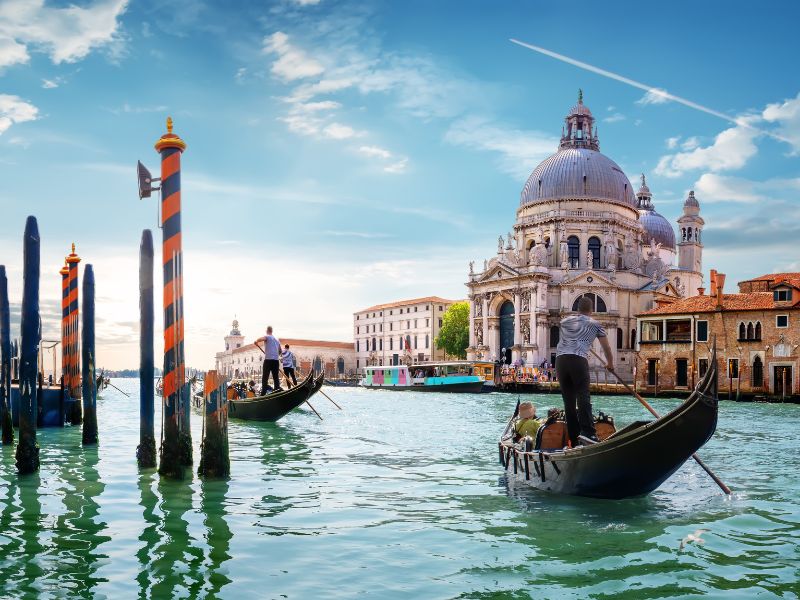
Santa Maria della Salute
Baroque plague-votive church (built from 1631) with its iconic white marble dome at the Punta della Dogana. The sacristy holds works by Titian and Tintoretto, including Tintoretto’s “Wedding at Cana”. Check sacristy admission and opening hours in advance.
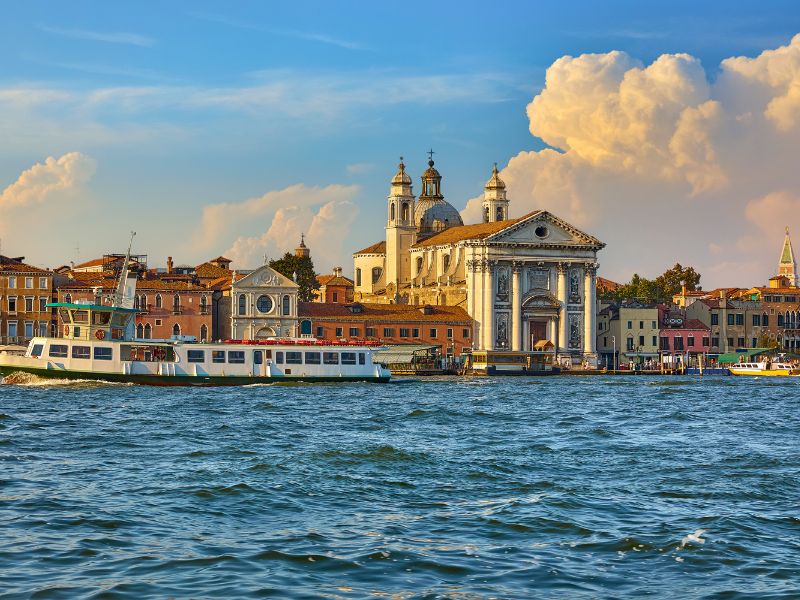
San Giorgio Maggiore
Palladio church on its own island with one of the finest views of the lagoon, San Marco and the mouth of the Grand Canal. The campanile has a lift; check price and opening hours in advance — usually shorter queues than at St Mark’s tower.
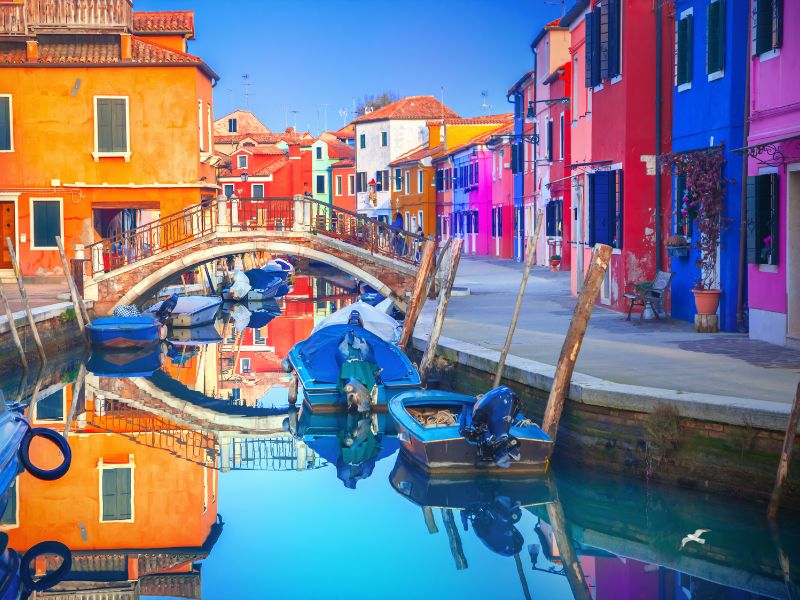
Burano
Fishing island with the famous coloured houses, lace craft and a leaning bell tower. About 40 minutes on vaporetto line 12 — most beautiful early in the day, before the day-trippers arrive.
All topics at a glance
Six main areas, more than 30 detailed articles with insider tips.
Sights
St Mark’s Basilica, Doge’s Palace, Rialto Bridge, Bridge of Sighs, Frari, San Rocco, Salute, Zanipolo & more.
Museums
Accademia, Peggy Guggenheim, Ca’ Rezzonico, Ca’ d’Oro, Querini Stampalia, Palazzo Fortuny.
Getting there
Train (Nightjet), flights to Marco Polo & Treviso, car + parking, coach, cruise terminals.
Islands
Murano (glass), Burano (lace + coloured houses), Torcello (Byzantine), Lido, San Lazzaro.
Acqua Alta
Live tide levels, 72-hour forecast, the MOSE barrier, season statistics, safe routes.
Access fee 2026
Contributo di Accesso: 60 applicable days, fees €5/10, booking via cda.ve.it, exemptions.
When is the best time to visit?
Month by month — temperature, acqua alta risk, main events.
Recommendation: April, May, September, October — the four “green months”.
Venice away from the tourist trails
Ten places that dominate no standard guidebook — curated for repeat visitors.
- Libreria Acqua Alta — bookshop with books in gondolas and bathtubs (Castello)
- Scala Contarini del Bovolo — spiral Renaissance staircase with a view (San Marco)
- Squero di San Trovaso — the city’s last active gondola workshop (Dorsoduro)
- San Lazzaro degli Armeni — Armenian monastery where Lord Byron learned Armenian (lagoon)
- Giardini di Sant’Elena — the city’s only large park (Castello)
- Ghetto Vecchio — five synagogues from the 16th century, guided tour (Cannaregio)
- … and five more insider stops
Frequently asked questions about visiting Venice
The most common questions — answered directly.
How many days do you need for Venice?
3 nights are enough for the main attractions. To go deeper with insider tips and the lagoon islands, plan 5–7 nights.
When is the best time to visit Venice?
April–May and September–October — mild weather, fewer tourists, lower hotel prices.
Do I have to pay the 2026 access fee?
Only as a day tourist without an overnight stay on one of the 60 applicable days (3 April – 26 July 2026, 8:30–16:00). Overnight guests do not pay the fee but must be able to prove their exemption via the official portal or with proof of accommodation. → Full calendar
What is the best way to get to Venice?
ÖBB Nightjet (Vienna/Munich, from €79), flight to Marco Polo (1.5 h), car via the Brenner, Flixbus — full details in our getting-to-Venice guide.
How much is a vaporetto ride?
Single ride €9.50. 24-hour pass €25, 48 h €35, 72 h €45, 7 days €65. All lines and the ticket calculator: Vaporetto Venice.
Which sestiere is best for your hotel?
San Marco: central, expensive. Cannaregio: quiet, cheaper. Castello: authentic. Dorsoduro: student quarter.
What is acqua alta?
The seasonal high water of the lagoon, mainly October–February. Since 2020 the MOSE barrier has protected Venice during many severe high-water events. → Live tide levels
Are gondola rides worth the price?
A gondola ride costs €90 for 30 minutes during the day, €110 in the evening for 35 minutes — per boat for up to 5 people, regulated by the city. Cheaper alternative: a short traghetto crossing of the Grand Canal (about €2), where the station is in operation. → Complete gondola overview with stations and routes